What adults can do to teach their children that differences matter?
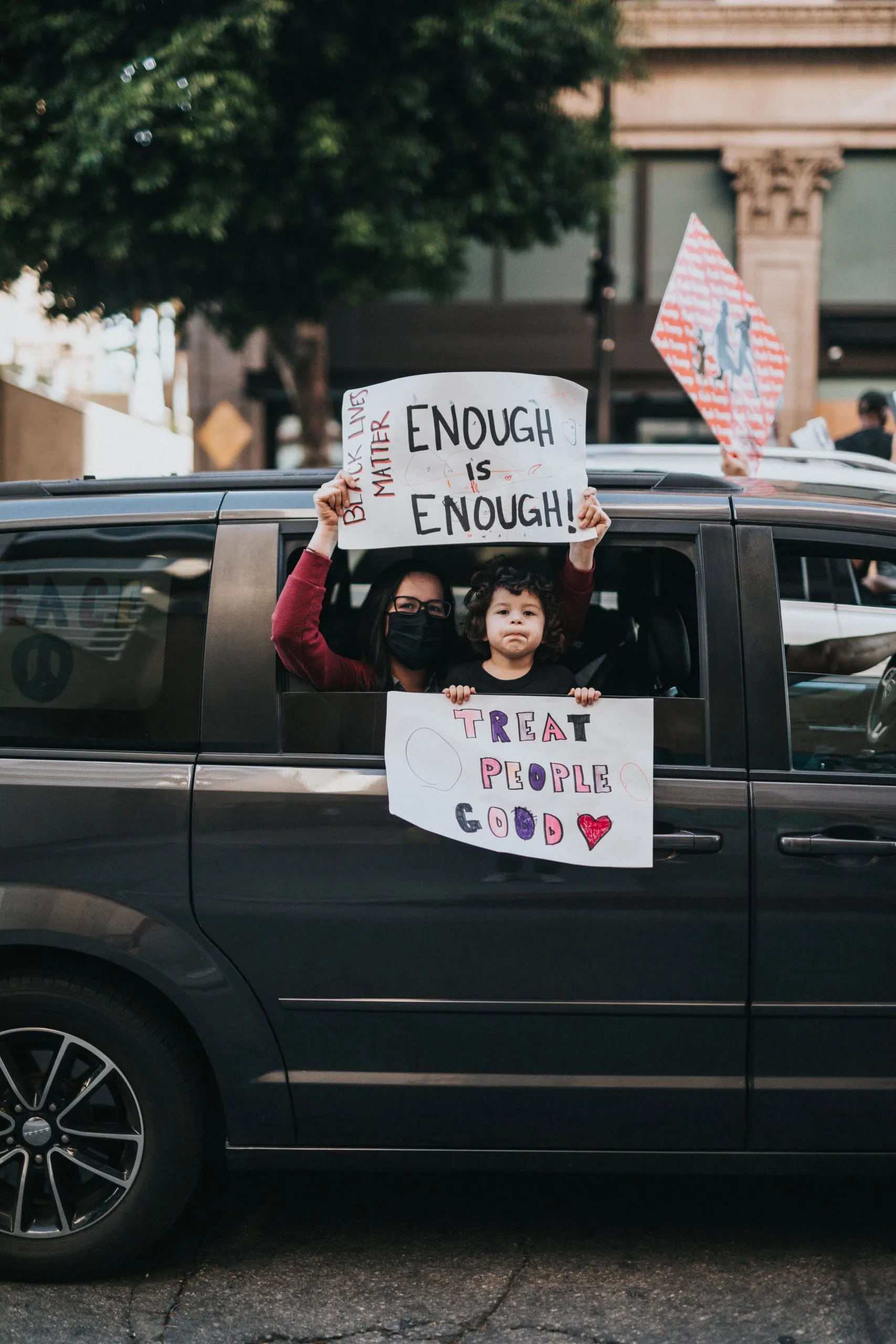
There has been a lot of tension, sadness, conflict, hatred, fear, trauma and sometimes apathy that has been taking place in the world due to DIFFERENCES.
We have all grown up understanding that we are not the same as everyone else (not even amongst our siblings). We may be similar in some ways but not the same, therefore…. DIFFERENT!
As parents and teachers, we teach our children about the differences not only in people but in animals, objects, plants, planets, food, liquid, gas, cities, languages, colours, cultures, countries, shapes and names. This is a necessity in order to differentiate between what’s-what and who’s-who? For example: teaching a child, that this red round fruit is called an apple, originally from Asia and Europe and that it tastes sweet.
But the manner in which the parent or teacher shows the child about that red round sweet apple will affect the child’s view of that apple.
Example1: Avoidance – If the parent dislikes sweet red round apples, she will most probably not buy them for the household, instead will choose to buy the green sour round apples, therefore only exposing or allowing the child the experience of a green sour apple.
Example2: Association – If the parent bites into the sweet red round apple and shows disgust on her face and spits it out. The child will associate the sweet round red apple, as YUCK!
Therefore the child mirrors the same behaviour and expression as the parent and will rather avoid a sweet juicy round red apple.
Which brings me to an excellent article written by Maushami Chetty: Race, The Elephant in our Classrooms http://ewn.co.za/v0pqh, where she talks about Unconscious Bias and the need to train teachers to talk about race in the classroom (PLEASE READ THE ARTICLE)!
UNCONSCIOUS BIAS: Unconscious biases are learned stereotypes that are automatic, unintentional, deeply ingrained, universal, and able to influence behaviour. https://en.wikipedia.org/wiki/Unconscious_bias_training
To add, Vanderbilt University in Nashville, Tennessee: “Unconscious bias (or implicit bias) is often defined as prejudice or unsupported judgments in favour of or against one thing, person, or group as compared to another, in a way that is usually considered unfair. Many researchers suggest that unconscious bias occurs automatically as the brain makes quick judgments based on past experiences and background. As a result of unconscious biases, certain people benefit and other people are penalised. In contrast, deliberate prejudices are defined as conscious bias (or explicit bias). Although we all have biases, many unconscious biases tend to be exhibited toward minority groups based on factors such as class, gender, sexual orientation, race, ethnicity, nationality, religious beliefs, age, disability and more.” https://www.vanderbilt.edu/diversity/unconscious-bias/
As Maushami Chetty mentioned in her article:”… children as young as 3 develop unconscious biases. They pick these up from the adults around them by deed (action) and not necessarily word. Children will notice whom you are relaxed around and whom you lock your car door for.” (similar to the red round apple example given previously)
As our children attend school they notice and are in contact with even the simple differences (and labels): big/small; short/tall; fat/thin; introvert/extrovert; assertive/passive; smart/ challenged; fast/slow; boy/girl; black/white; brother/sister; teacher/pupil….these differences are important to understand to survive in a world full of differences. Unfortunately, sometimes these differences….(due to unconscious bias) lead to prejudices where certain people benefit and other people are penalised. With this, the child also learns the oppressions and prejudices of sexism, racism, homophobia, religion, culture and disabilities.
So how do we overcome this unconscious bias that leads to prejudice, oppression or indifference? We all like to think we are unprejudiced, inclusive and objective, but unconsciously, we tend to gravitate towards the people who look and think like us.
5 WAYS TO REDUCE UNCONSCIOUS BIAS WITHIN YOURSELF AND WITH YOUR CHILD (children learn best by what they see!)
- BE AWARE:
The first step in unconscious bias reduction is being aware of what it is and how it can affect others. Just being aware allows our unconscious to slowly move into the conscious where we can be completely aware and begin to manage the bias and its effects. Each person has subconscious preferences for certain people and objects, which unintentionally influence decision making.
As human beings, we process vast amounts of information; to simplify all of this information, our brains tend to categorise the world around us and our bodies recall certain experiences, events and situations in life. This allows us to know what to expect and how to react around certain objects or situations. This also means that we automatically categorise other human beings or events.
Research shows that beliefs and values gained from family, culture and a lifetime of experiences heavily influence how we view and evaluate both others and ourselves. This was programmed into us originally as a protection mechanism in early man to rapidly identify our friends and enemies, but in today’s multi-faceted society, it can result in decisions and behaviours based on bias.
2. QUESTION OTHERS AND YOURSELF:
To reduce the effects of unconscious bias, question biases in yourself and raise awareness in others. Ask the following questions:
- Ask yourself: Is what I’m going to say or my opinion factually true? (eg: Are red round apples disgusting? or Are girls weak and bad at sports?)
- Ask yourself: Is it always factually true? (eg: Have red round apples always been disgusting or just in my childhood? or Are all girls weak and bad at sports or does my sister just dislike sports?)
- What evidence do I have? (eg: My evidence is my mom’s disgusted facial expression when she bit into red round apple and I never had red round apples at home or My evidence is, my father saying that girls are no good at sports because his sister didn’t do sports.)
3. CREATE INCLUSIVE PRACTICES:
Creating an inclusive environment and behaviour or action by the parent or adult in the child’s life allows the child to learn, observe and experience how to be inclusive.
- Be aware of how you greet, approach and acknowledge any person.
- Respect and value others as you would want to be respected and valued.
- Challenge yourself to talk, sit next to and interact with people you don’t normally interact with.
- Try not to evade an uncomfortable encounter.
- If you disagree with someone else’s opinion, respond constructively rather than giving a negative response that may stop this person from voicing their opinion again.
- You as parent /adult should request or ask everyone’s opinion, don’t always side with one member, listen out to everyone’s opinion.
- As parent/adult, make sure that when decisions are made they are fair and inclusive, not influenced by the power a single individual may hold.
- In the family or classroom setup, be open to challenges from all members by asking for counter opinions and examples and solutions.
4. CREATE A SUPPORTIVE DIALOGUE:
Supportive phrases that can be used to help you (and in turn teach the child) to approach an uncomfortable situation:
- Acknowledge Feelings: “I understand/ see/ notice that you REALLY don’t feel like inviting your sister to your soccer party.”
- Clarify (avoid assumptions): “I am a bit confused as to why you feel this way?” (DO NOT ASSUME: “Is it because she is a girl?”)
- Explore Evidence: “When you say, it’s because she is a girl, help me understand what you mean by that?”
- Solving the Problem and Moving Forward: “Ok, so what would work for both you and her?”
By consciously practising the following exercises, you can take the first steps towards supporting others to question bias.
5. TAKE ACTION:
The behaviour displayed may seem barely noticeable but is very impressionable on children and it can have enormous effects. Here is an example of how unconscious gender bias can feel and what can be done to reduce the effects:
Example: At a primary school, the male principal has to make a decision on whether a girl prefect or a boy prefect would be best suited to guide, take care and support the new grade one pupils. The principal decides on the girl prefect on the basis that she is a girl and more feminine and has qualities of taking care and nurturing smaller children, like a mother (female) would, instead of choosing the boy prefect, as the principal is aware that the boy prefect has no siblings and may not know how to deal with younger kids. The principal does not explore the opinion and interest of either the boy or girl prefect.
What are the consequences of the principals decision?
- By not asking either party for their views/ opinions, the principal would not have been aware that the girl prefect had no preference to take care of the grade ones due to her having a sibling in grade one that she doesn’t have a good relationship with. The boy prefect would love to be a good example or be like a “big brother” to the grade ones, as he doesn’t have that opportunity at home.
- The boy prefect may, through the year, not offer to look after the younger kids as it may be seen by others as a female role and he would be bullied.
- It is highly likely that this will decrease the confidence of the boy prefect. A decrease in confidence can also have a number of effects including a decrease in quality of performance and therefore a decrease in selection for future tasks or projects, leading to a vicious cycle.
What are the unconscious beliefs (bias) of the principal that led to this decision?
- Females are better with caring for smaller children.
- Males work better in a managerial position.
- Girls are more in touch with their emotions and display nurturing characters.
- Boys are not emotionally connected and are tougher.
- By choosing the girl prefect, the grade ones will have better support.
- Boys can’t show compassion and nurture.
TIPS: HOW CAN WE AVOID THESE UNCONSCIOUS BELIEFS THAT AFFECT OUR BEHAVIOUR?
- Question your unconscious assumptions
- Ask someone to evaluate your decision
- If you know that an individual has personal challenges, make your decision purely on competency and experience
- Talk to both parties/ individuals as well as a third party to clarify resources or tools and to enable participation (eg: at home have family meetings and discuss problems, listen to everyone’s views and explore their solutions and suggestions and meet each other in the middle).
I would like you to watch this next video to see an example of how unconscious bias can influence our judgement of a specific group and can cause prejudice (Always #Like A Girl). https://www.youtube.com/watch?v=XjJQBjWYDTs
So adults, what are you going to do DIFFERENTLY?